
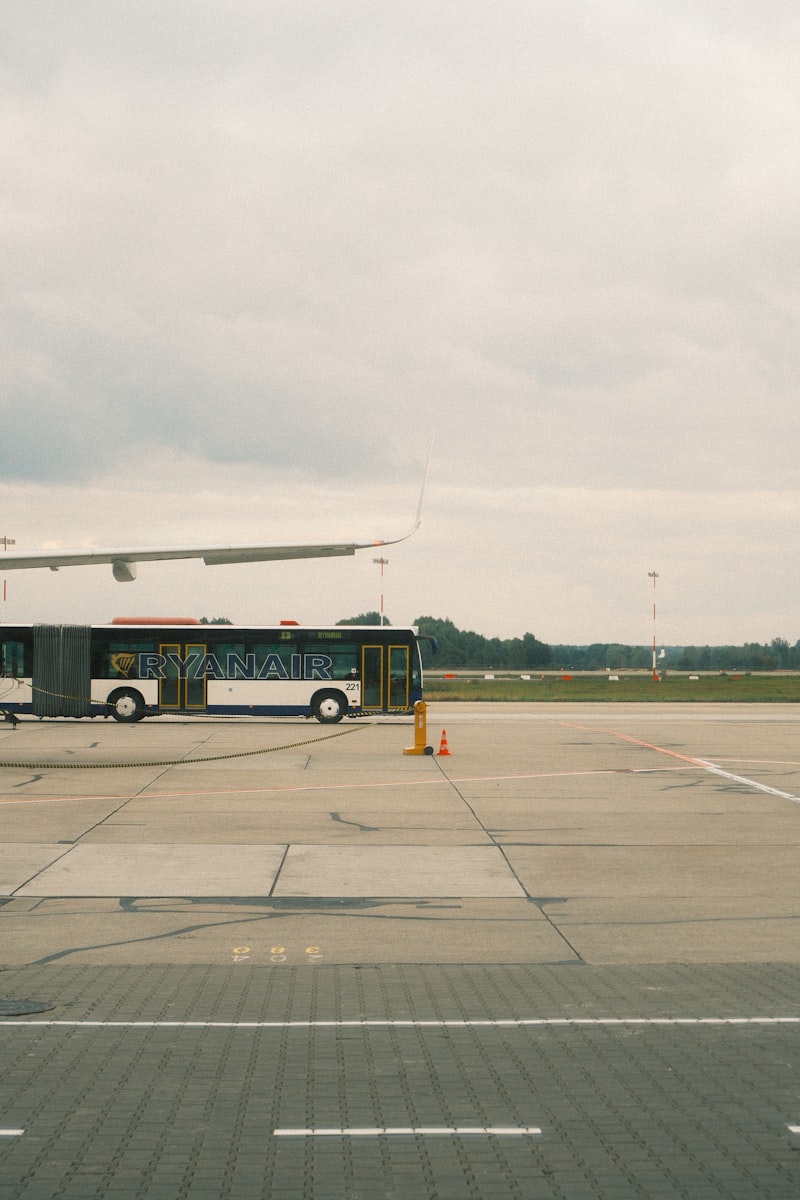
 Transport
 Getting from Dublin Airport to the City
6 min read
Your Journey Starts the Moment You Land
You've just landed at Dublin Airport after a long-haul flight from Brazil, probably exhausted and carrying more luggage than you thought you would. The last thing you want is to figure out transport from scratch. The good news: getting from the airport to the city centre is straightforward once you know your options. Here's exactly what to do.
Dublin Airport — Quick Orientation
Dublin Airport has two terminals: Terminal 1 (older, used by most non-EU airlines including many connecting flights) and Terminal 2 (newer, used by Aer Lingus and some others). Both terminals connect via a short walkway inside the airport and both are served by the same ground transport options. When you exit Arrivals, follow signs to "Ground Transport" — all buses and taxis are just outside the arrivals hall.
Option 1: Dublin Express (Routes 782 & 784) — Recommended
The old Airlink service (routes 747/757) was permanently discontinued. Dublin Express is now the airport's dedicated bus service and the best option for most students — it runs directly between the airport and the city centre without stopping in residential areas.
- Route 782: Airport → city centre → Heuston Station. Covers the north and west of the city centre.
- Route 784: Airport → city centre (Stephen's Green / Camden Street) → Grand Canal Dock. Better for the south city and Docklands area.
- Price: from €9 one-way, booked in advance at dublinexpress.ie or at the terminal. Leap Cards are NOT accepted.
- Journey time: 30–45 minutes depending on traffic. Morning rush hour (8–10am) can add 15–20 minutes.
- Frequency: Every 30 minutes.
- Luggage: Luggage storage is in the hold of the bus — plenty of space.
If you don't know your exact Dublin address yet or your accommodation is in the city centre area, take the 782 or 784 and orient from there. If you have a Leap Card and don't mind a slower, multi-stop ride, public Route 41 (24-hour) or Route 16 also serve the airport at the standard fare (about €2).
Option 2: Aircoach — Good for North Dublin & Late Night
Aircoach is a private bus company that runs several routes from the airport, including a 24-hour service that is your only bus option in the middle of the night.
- Route 700: Airport → O'Connell Street → Stephen's Green → Ballsbridge → Donnybrook. Useful for students living in the south city or Ballsbridge area.
- Route 702: Airport → Swords → Malahide. For students hosted in north Dublin suburbs.
- Price: €9–10 one-way. Buy online at aircoach.ie in advance for slight savings. Card accepted on board.
- 24-hour service: The Route 700 runs through the night, roughly every 30–60 minutes. If you arrive on a red-eye flight at 4am, this is your only bus option.
Option 3: Regular Dublin Bus — Cheapest, But Slower
Standard Dublin Bus routes serve the airport — notably Route 16 (towards the south city) and Route 41 (towards the north city and Swords). These are significantly cheaper than Airlink or Aircoach, and your Leap Card works here. However, these routes make many stops through residential areas, adding 60–90 minutes to your journey. Fine if you're not in a rush and have a Leap Card already loaded.
Option 4: Taxi or Uber
Taxis in Dublin are metered and regulated. A taxi from the airport to the city centre costs approximately €25–35 depending on traffic and your destination. Uber operates in Dublin and is often similar in price to metered taxis, sometimes slightly cheaper during off-peak hours.
- The taxi rank is just outside the arrivals exit — official taxis only, no need to negotiate a price.
- For Uber, download the app and request your ride before leaving the terminal. Uber pick-up is at a designated area signposted at the airport — not the same as the taxi rank.
- Taxis are worth it if you have heavy luggage and are going to a specific address far from a bus stop, or if you're arriving very late and sharing with a friend or housemate.
- Unlike in Brazil, do not get in an unlicensed taxi that approaches you inside the terminal. Use only the official rank or a ridesharing app.
Option 5: DART or Train
There is no direct train from Dublin Airport to the city centre. The DART and Commuter Rail do not serve the airport. Do not follow signs for "Luas" from the airport either — the Luas does not run to the airport. Any option claiming to be a train at the airport is a local bus connection and not faster than Airlink. Stick with the bus options above.
Tips for Your First Arrival
- Have a small amount of euros ready — while everything is card-friendly, having €20–30 cash on arrival gives you a safety net if your card doesn't work immediately.
- Download Google Maps offline before you fly (download the Dublin map area). Airport Wi-Fi exists but can be unreliable during peak hours.
- Save your accommodation address as a Google Maps favourite before landing. Show it to a taxi driver or use it to confirm which bus stop you need.
- Luggage storage is available at the airport if you arrive very early before check-in opens at your accommodation.
- Currency exchange at the airport is expensive. Use an ATM (there are several in the arrivals hall) with your Revolut or Wise card for better rates. Avoid the bureau de change kiosks.
- The airport has free Wi-Fi — connect before you board a bus to let your accommodation know your arrival time.
Which Option Should You Choose?
For most students arriving during the day with one or two suitcases: take Dublin Express (782 or 784). It's fast, direct, runs every 30 minutes, and costs from €9. Pay by card, put your luggage in the hold, and you'll be in the city centre in under an hour. From there, continue by Dublin Bus or Luas to your final destination — tap your Leap Card and you're set. On a tighter budget and comfortable with a slower, multi-stop ride, public Route 41 or Route 16 get you there on your Leap Card for about €2.
Healthcare & Emergency Contacts
GP registration, pharmacies, emergency numbers, mental health support, and the Brazilian consulate in Dublin.