
 Transport
 Getting from Dublin to Belfast — A Day Trip Worth Making
4 min read
Belfast Is Two Hours from Dublin — and Worth Every Minute
Belfast is the capital of Northern Ireland, which is part of the United Kingdom — not the Republic of Ireland. It's on the same island, just two hours north of Dublin by train, but crossing the border puts you in a different country with a different currency. The border itself is invisible — no passport control, no queues — but you'll quickly notice the road signs switch to miles and shop prices switch to pounds sterling (GBP).
Getting There
The Enterprise service is the classic way to travel between Dublin and Belfast. Jointly operated by Irish Rail and Translink, it departs from Connolly Station in Dublin and arrives at Belfast Grand Central Station — the city's new integrated rail and bus hub, which replaced Lanyon Place as the Enterprise terminus in 2025. The journey takes about 2 hours 10–15 minutes, with roughly 8 departures a day each way on weekdays.
- Advance online single: from EUR 17 — book at irishrail.ie or translink.co.uk as soon as you know your date.
- Advance return: typically EUR 26–30 if booked more than a week ahead.
- Walk-up (no advance booking): a single can run EUR 30–34 — always book ahead to save.
- The train has Wi-Fi, power sockets and a café car — comfortable for the ride.
Coach options are cheaper and a bit slower (2.5–3 hours depending on traffic):
- Aircoach (route 300X): departs from O'Connell Street. Roughly EUR 7–15 return. Booking isn't required but is recommended on weekends.
- GoBus: departs from Busáras. Competitive prices and free Wi-Fi on board.
- Bus Éireann / Goldline Express: departs from Busáras, arrives at Belfast Europa Bus Centre. Fares from EUR 10 single with advance booking.
- FlixBus: usually the cheapest option, from EUR 5–12 return — book weeks ahead on the app.
Northern Ireland: What You Need to Know
Northern Ireland is part of the UK, but the two countries share the Common Travel Area (CTA) — there's no passport control at the border. Your Irish student visa and IRP card are fully accepted, and you technically don't need a passport to make this crossing. Still, always carry photo ID — and if you're flying onward from Belfast to another destination, a passport becomes mandatory at check-in.
- Currency: pounds sterling (GBP), not euro. Many shops near the tourist centre accept euros, but at a poor exchange rate — avoid bureau de change kiosks. Use a fee-free card (Revolut or Wise are ideal) or withdraw a small amount of GBP from an ATM on arrival.
- Mobile roaming: Northern Ireland isn't in the EU — your Irish SIM may charge international rates. Check with your carrier before travelling, or stick to Wi-Fi.
- Time zone: same as the Republic. Nothing to adjust.
What to Do in Belfast
- Titanic Belfast: built on the exact site where the RMS Titanic was constructed, it's the world's largest Titanic-related visitor attraction. Admission runs about GBP 21–26 — book online to save time and money. Set aside 2–3 hours.
- Black Taxi Political Mural Tour: the famous murals of Falls Road (republican) and Shankill Road (loyalist) tell Belfast's recent, complicated history. A guided black-taxi tour costs about GBP 15 per person and runs 90 minutes — one of the most memorable things you can do in Ireland.
- Cathedral Quarter: Belfast's creative, nightlife-heavy neighbourhood, compact and easy to walk. The Crown Liquor Saloon (Great Victoria Street), a National Trust–listed Victorian pub, and the Duke of York, narrow and lined with old whiskey adverts, are the most charming stops — worth a look even just for a coffee.
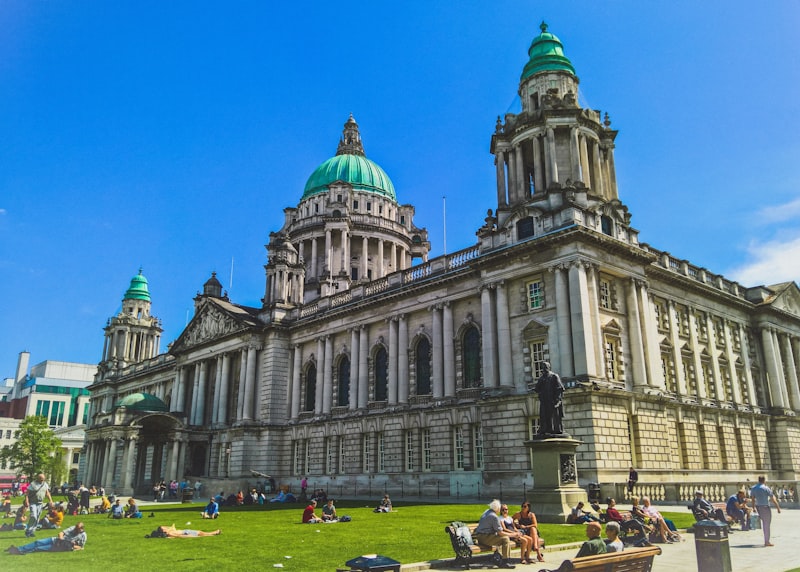
- City Hall: free entry. The grounds are a central meeting point — great for lunch and people-watching.
- Victoria Square: a shopping centre with a glass-dome observation deck over the city skyline — free to go up.
- St George's Market (Fri–Sun): artisan food, local crafts and live music. One of the best markets on the island of Ireland.
Getting Back to Dublin
The last Enterprise train from Belfast Grand Central to Dublin Connolly departs around 8pm on weekdays — check the exact time when booking, since it varies slightly by day. The last Goldline coach from Belfast Europa Bus Centre leaves around 9pm. Planning your day around these times gives you 10–11 comfortable hours in Belfast — leave Dublin by 9am to make the most of the day.
Practical Tips
- Carry your IRP card or passport as ID — Belfast pubs and clubs check identification strictly.
- Google Maps works well in Belfast and shows real-time bus times if you want to explore beyond the centre.
How Departi Can Help
Departi's destination guides explain the practical differences between the Republic of Ireland and Northern Ireland — currency, roaming and cultural context. Departi's community also connects you with other students in Dublin who want to explore the country together — a Belfast day trip is more fun, and turns into real English practice, with people you met through the app.

Dublin's Public Libraries — Free Study Spaces and Community
A library card costs nothing and unlocks free WiFi, audiobooks, eBooks, quiet study rooms, and English conversation groups across Dublin's 22 branches.