
 Culture
 Traditional Irish Music — How to Find and Enjoy a Trad Session
5 min read
What Makes Irish Traditional Music Unlike Anything You've Heard
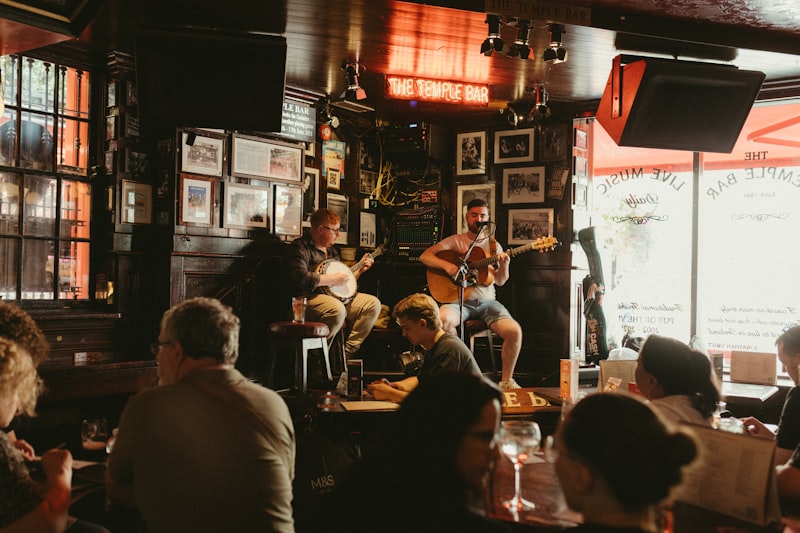
The first time you walk into a pub and hear traditional Irish music being played in the corner, something happens. There's no stage, no lighting rig, no ticket — just six or seven musicians packed around a small table, playing at each other rather than at an audience, generating something that fills the whole room without trying to. For many Brazilian students, it's one of the most unexpectedly moving experiences of the entire exchange.
Ireland's traditional music tradition is alive in a way that most countries' folk music is not. These aren't heritage performers or tourist acts — they're ordinary people who meet weekly to play together, continuing a practice that has been uninterrupted for centuries. Understanding what you're watching (and how to watch it respectfully) makes the experience completely different.
What Actually Happens at a Trad Session
A trad session is an informal gathering of traditional musicians who play together, usually in a pub. There is no set list, no stage, and often no announcement. One musician starts a tune, others recognise it and join in. When it finishes, someone starts the next one. Sets of three or four related tunes are played back to back without pausing — this is called a "set". The music is for the musicians first and the listeners second, which is exactly what makes it feel so different from a performance.
Sessions happen throughout the week at specific pubs. Some are open sessions where any musician can pull up a chair and join in. Others are more established groups who play together regularly. You'll find a mix of both in Dublin.
The Instruments You'll Hear
- Fiddle: A violin played in a specific style — energetic bowing, slides between notes, and an urgency you won't find in classical music. The most common instrument at any session.
- Tin whistle (feadóg): A simple six-holed flute that sounds deceptively easy and is technically demanding to play well. Often the instrument children start on.
- Uilleann pipes: Ireland's bellows-blown bagpipes. Quieter and more complex than Scottish pipes, with a uniquely mournful sound. Rare at casual sessions but unforgettable when you hear them.
- Bodhrán: A handheld frame drum played with a tipper (small stick). Keeps the pulse. Easy to start, impossible to master.
- Flute: A wooden concert flute — darker and warmer in tone than the tin whistle. Very common at sessions.
- Accordion/concertina: Button accordion or the smaller hexagonal concertina. Enormously satisfying to watch close up.
- Guitar/bouzouki: Chord accompaniment for the melody instruments. Subtle, understated, and the backbone of the session sound.
Where to Find a Session in Dublin
Dublin has dozens of weekly sessions. A few that are particularly welcoming and consistently good:
- The Cobblestone (Smithfield): The most respected traditional music pub in Dublin city. Sessions Thursday, Friday, and Saturday nights. Arrive early — the front bar fills quickly. This is the one locals recommend most.
- O'Donoghue's (Merrion Row): One of the most famous trad pubs in Ireland — the Dubliners played here in the 1960s. Sessions most nights. A short walk from St. Stephen's Green.
- The Brazen Head (Lower Bridge Street): Claims to be Dublin's oldest pub (1198). Sessions most evenings. Tourist-friendly atmosphere but still authentic music.
- Hughes' Pub (Chancery Street): Smaller and less well-known, beloved by musicians for its intimate atmosphere. Near the Four Courts.
For a full schedule of sessions across Ireland, the website thesession.org lists every session by city, day, and pub.
Trad Session Etiquette — What Not to Do
Sessions have an unspoken code of conduct. As a listener, a few things to know:
- Don't talk loudly near the musicians while they're playing. Conversations happen at sessions, but not directly in the musicians' ears. Move away from the group if you want to chat.
- Don't request specific songs. The session isn't a jukebox. Musicians play what they feel like, and the set flows organically. "Can you play Danny Boy?" is the fastest way to mark yourself as someone who doesn't understand how this works.
- Applaud between sets, not between individual tunes. Multiple tunes are played continuously in a set. Wait for a natural pause before clapping.
- Don't try to join the session if you don't play trad. Even if you're a skilled musician in another genre, sitting in on a session uninvited is not appropriate. The musicians have an established circle.
- Buy a drink and settle in. You don't need to drink alcohol — water, juice, or tea is fine. But staying for the session and spending at the bar is the respectful way to enjoy the music.
Why Brazilians Usually Love It
Ireland and Brazil have more in common musically than you might expect. Both countries have strong living traditions of community folk music that exist outside the mainstream — forró, baião, and samba de roda in Brazil; jigs, reels, and slow airs in Ireland. Both are built on people gathering to play together rather than to perform. Both carry something that feels like a direct link to something older and harder to name.
Brazilian students who find their way to a trad session often say it's one of the highlights of their time in Ireland — precisely because it's not a tourist attraction, not a show, and not something you need to fully understand to feel. You just show up, listen, and let it happen.

Tax Refunds in Ireland — How to Claim Back Overpaid PAYE
Most students who work in Ireland overpay income tax. Here's exactly how to claim your refund online — and how much you can realistically expect back.